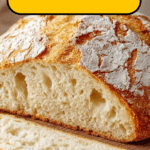
World’s Easiest No-Knead Artisan Bread with Crispy Crust & Chewy Crumb Recipe
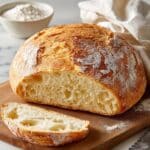
This no-knead artisan yeast bread recipe is incredibly easy to make and yields a loaf with a crispy crust and chewy crumb. Using minimal ingredients and simple steps, it requires only mixing, rising, and baking in a preheated Dutch oven to achieve a rustic, bakery-quality loaf at home. Perfect for beginners, this bread has a wonderfully open texture and can be flavored further with an optional cold fermentation step.
- Prep Time: 10 minutes
- Cook Time: 40-42 minutes
- Total Time: 2 hours 50 minutes to 3 hours 10 minutes (excluding optional cold fermentation)
- Yield: 1 loaf (about 10 servings) 1x
- Category: Bread
- Method: Baking
- Cuisine: Artisan / American
- Diet: Vegetarian
Ingredients
Scale
Dry Ingredients
- 3 cups All-purpose or Bread flour
- 2 tsp Instant or Rapid Rise yeast
- 2 tsp Kosher salt
Wet Ingredients
- 1 1/2 cups Very warm tap water
For Preparation
- Extra flour for dusting
Instructions
- Combine the Dry Ingredients: In a large mixing bowl, add the flour, instant yeast, and salt. Stir briefly to evenly distribute the yeast and salt throughout the flour.
- Add Water and Form the Dough: Pour the very warm tap water into the bowl. Using the handle of a wooden spoon or a sturdy spatula, mix until all the flour is fully hydrated. The dough will be sticky, loose, and shaggy—this wet consistency is essential for creating large air pockets.
- First Rise (Room Temperature Fermentation): Cover the bowl tightly with plastic wrap. Place it in a warm area for 2 to 3 hours, until the dough has doubled in size. The surface should look bubbly and the dough should jiggle when the bowl is gently shaken.
- Optional Cold Fermentation (Flavor Boost): For deeper flavor and a more complex, sourdough-style taste, transfer the covered bowl to the refrigerator for anywhere from 8 hours up to 3 days. The longer it rests, the more developed the flavor will be.
- Preheat the Dutch Oven: Thirty minutes before baking, place the empty Dutch oven with its lid into the oven. Preheat the oven to 230°C / 450°F. This step is crucial to create intense heat and steam for proper oven spring.
- Shape the Dough (Minimal Handling): Lightly flour your work surface. Scrape the dough out of the bowl using a dough scraper. Sprinkle the top with a little flour, then fold the edges inward about 5–6 times to form a rough ball. Do not knead.
- Transfer to Parchment Paper: Flip the dough seam-side down onto a sheet of parchment paper. This makes transferring the dough into the hot pot safe and easy.
- Bake Covered (Steam Phase): Carefully remove the hot Dutch oven from the oven. Lift the dough using the parchment paper and place it directly into the pot. Cover immediately with the lid and bake for 30 minutes.
- Uncover and Crisp the Crust: Remove the lid and continue baking for an additional 10–12 minutes, until the crust turns deep golden brown and sounds hollow when tapped.
- Cool Before Slicing: Transfer the bread to a wire rack and allow it to cool for at least 10–15 minutes. This resting time allows the interior crumb to finish setting and prevents a gummy texture.
Notes
- Cold fermentation in the refrigerator is optional but enhances flavor and creates a sourdough-like complexity.
- Do not knead the dough; minimal handling preserves large air pockets for a chewy crumb.
- Preheating the Dutch oven is essential for creating steam, which develops a crispy crust.
- Use parchment paper to safely transfer the dough into the hot Dutch oven and avoid burns.
- Allow the bread to cool before slicing to avoid a gummy texture inside.
Keywords: no-knead bread, artisan bread, yeast bread, easy bread recipe, homemade bread, crusty bread, chewy bread, Dutch oven bread