Homemade Gluten Free Pasta Recipe
Introduction
Making homemade gluten free pasta is easier than you might think and results in a fresh, tender pasta perfect for any sauce. This recipe uses a simple gluten free flour blend and eggs to create delicious pasta you can shape and cook at home.
Ingredients
- 200 g (1⅔ cups) plain gluten free flour blend, plus extra for kneading and dusting
- 1 tsp xanthan gum (reduce to ½ tsp if your flour blend already contains xanthan gum)
- 3 large eggs (US large/UK medium)
- ½ tbsp olive oil (optional, for a smoother dough)
Instructions
- Step 1: Whisk together the gluten free flour blend and xanthan gum in a bowl.
- Step 2: Make a well in the center of the dry ingredients and add the eggs and olive oil, if using. Mix together until a shaggy dough forms.
- Step 3: Turn the dough onto a lightly floured surface and knead for 2-3 minutes until smooth and supple, adjusting with extra flour or egg if it’s too wet or crumbly.
- Step 4: Divide the dough into four equal pieces. Keep the pieces you’re not working with covered to prevent drying out.
- Step 5: Roll out one piece on a floured surface with a rolling pin into a long oval or rectangle. Fold it into thirds, rotate 90 degrees, and roll out again.
- Step 6: Pass the dough through the widest setting on a pasta machine to smooth it. You can repeat folding and rolling by hand to ensure evenness before passing through the machine again.
- Step 7: Gradually roll the pasta sheet through narrower settings on the machine until reaching the desired thickness, dusting with flour as needed.
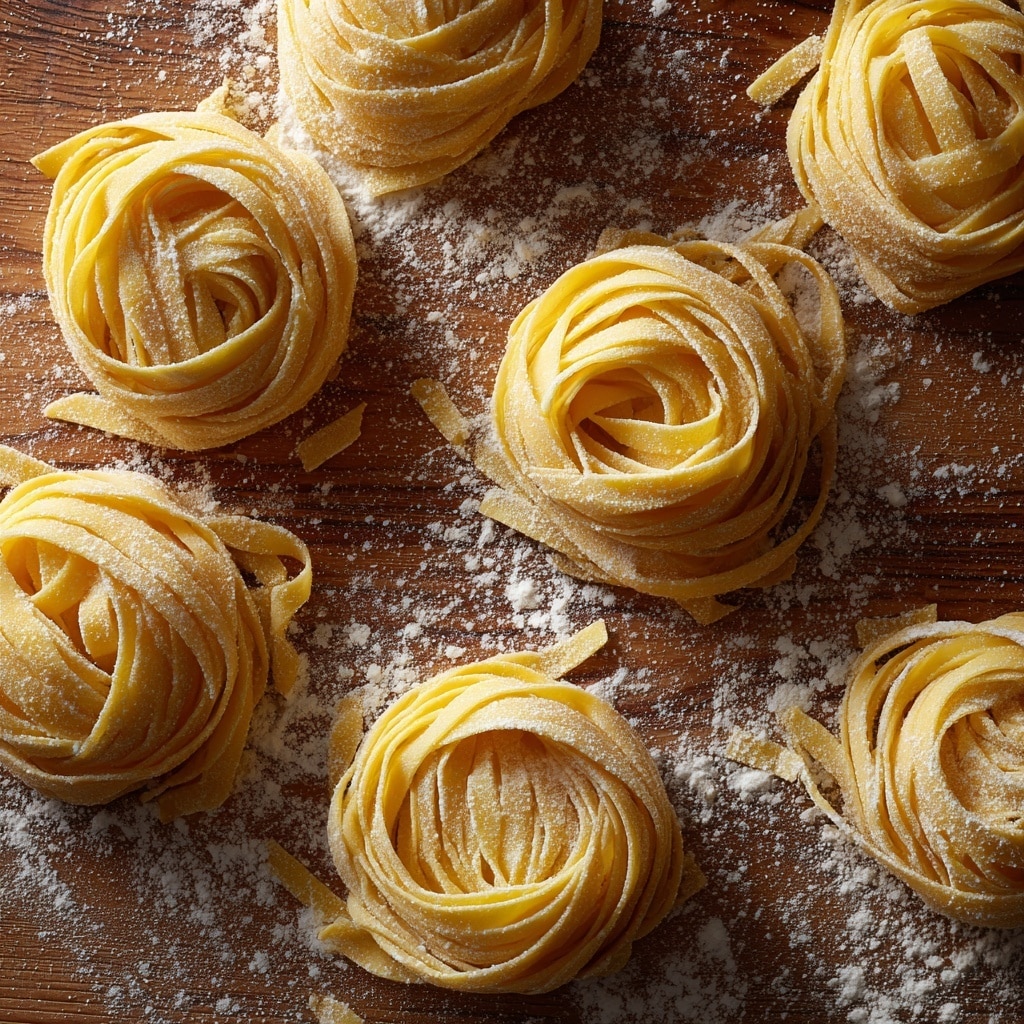
- Step 8: Cut the pasta into shapes like tagliatelle or pappardelle with a knife or pasta machine cutter. Dust with flour and shape into nests.
- Step 9: Cook fresh pasta in salted boiling water for 4-6 minutes until tender.
Tips & Variations
- If dough is crumbly, slowly add a whisked egg until smooth; if too wet, add more flour a little at a time.
- Olive oil is optional but helps create a smoother dough.
- Use a digital scale for accurate flour measurement, especially if mixing your own gluten free blend.
- Adjust the pasta thickness depending on the dish—thinner sheets are ideal for ravioli or tortellini.
Storage
Store fresh pasta in the fridge for up to one day in an airtight container, dusted generously with flour to prevent sticking. For longer storage, freeze pasta on a floured baking sheet until firm, then transfer to a freezer bag for up to one month. Frozen pasta will take 1-2 minutes longer to cook.
How to Serve
Serve this delicious recipe with your favorite sides.
FAQs
Can I use a gluten free flour blend with xanthan gum already included?
Yes, if your flour blend contains xanthan gum, reduce the added amount to ½ teaspoon to avoid over-binding the dough.
How do I know when the dough has the right consistency?
The dough should be firm but not dry, forming a smooth ball without cracking or sticking to your hands. Adjust with a little extra egg or flour as needed.
PrintHomemade Gluten Free Pasta Recipe
This Homemade Gluten Free Pasta recipe offers a simple and customizable way to make fresh pasta without gluten. Using a gluten free flour blend and eggs, the dough is kneaded, rolled out, and cut into your preferred shapes before cooking. Perfect for those with gluten sensitivities seeking delicious, fresh pasta at home.
- Prep Time: 20 minutes
- Cook Time: 5 minutes
- Total Time: 25 minutes
- Yield: 4 servings 1x
- Category: Pasta
- Method: Stovetop
- Cuisine: Italian
- Diet: Gluten Free
Ingredients
Dry Ingredients
- 200 g (1⅔ cups) plain gluten free flour blend, plus extra for kneading and dusting
- 1 tsp xanthan gum (Or ½ tsp if the flour blend already contains xanthan gum)
Wet Ingredients
- 3 US large/UK medium eggs
- ½ tbsp olive oil (optional, for smoother dough)
Instructions
- Mix dry ingredients: Whisk together the gluten free flour blend and xanthan gum thoroughly in a bowl.
- Add wet ingredients and form dough: Make a well in the center of the dry ingredients, add eggs and olive oil (if using), then mix into a shaggy dough.
- Knead dough: Turn the mixture onto a lightly floured surface and knead for 2-3 minutes until smooth and supple, adjusting with extra flour or egg as needed for the right consistency. The dough should be firm, not sticky or crumbly.
- Divide dough: Split the dough into 4 equal portions, wrapping unused pieces to keep moist while working on one portion at a time.
- Roll dough into sheets: Roll out a piece into a long oval or rectangle on a floured surface, fold the dough into thirds, rotate 90 degrees, and roll out again. Pass the dough twice through the widest setting on a pasta machine or roll similarly by hand to get a smooth sheet.
- Thin the pasta: Continue passing the sheet through progressively narrower settings twice each time until reaching desired thickness (usually setting 4 for fettuccine, tagliatelle, or pappardelle; setting 5 for thinner pasta like ravioli).
- Cut and shape pasta: Using a sharp knife or pasta machine cutter, slice sheets into desired pasta shapes such as tagliatelle or pappardelle. Dust with flour and form into nests to prevent sticking.
- Cook fresh pasta: Boil fresh pasta in salted water for 4-6 minutes depending on texture preference.
- Store pasta: Refrigerate dusted pasta in an airtight container for up to one day. For frozen storage, freeze shaped pasta on a floured baking sheet for 1 hour, then transfer to a freezer bag for up to one month. Frozen pasta requires 1-2 additional minutes of cooking time.
Notes
- Adjust egg or flour quantity to achieve correct dough consistency; dough should be firm but pliable.
- Use a digital kitchen scale for best measurement accuracy, especially with gluten free flour blends.
- Olive oil is optional but helps create smoother dough.
- Dust pasta well with flour during handling to avoid sticking.
- Refer to detailed photos on the original blog to guide rolling and shaping.
- Store fresh pasta carefully to maintain texture and prevent sticking.
- Frozen pasta may need slightly longer cooking time than fresh.
Keywords: homemade gluten free pasta, gluten free pasta dough, fresh pasta recipe, gluten free cooking, pasta dough without gluten