Baker’s Croissants Recipe
Introduction
Making buttery, flaky croissants at home is a rewarding challenge that fills your kitchen with irresistible aromas. This detailed recipe guides you through every step, from preparing the dough to shaping and baking perfect croissants. With patience and care, you’ll enjoy bakery-quality results.
Ingredients
- 2 large eggs plus enough warm water to make 2 cups (454g) of liquid
- 1/4 cup (50g) granulated sugar, divided
- 5 1/2 to 6 cups (660g to 720g) King Arthur Unbleached All-Purpose Flour
- 2 1/4 teaspoons instant yeast
- 2 tablespoons (28g) butter, melted
- 1/2 cup (56g) King Arthur Baker’s Special Dry Milk or nonfat dry milk, optional
- 1 scant tablespoon (16g) table salt
- 1 teaspoon King Arthur Pure Vanilla Extract, optional (for sweet pastry)
- 30 tablespoons (425g) unsalted butter, cool to the touch
- 3/4 teaspoon table salt
- 1/2 cup (60g) King Arthur Unbleached All-Purpose Flour
Instructions
- Step 1: To make the dough, put the eggs and warm water in a large mixing bowl. Add 1 tablespoon of sugar, 3 cups (362g) of flour, and the yeast. Mix until well blended and set aside to let the sponge develop.
- Step 2: For the butter block, cut the cold butter into 1-inch chunks and combine it with 3/4 teaspoon salt and 1/2 cup (60g) flour in a stand mixer with the paddle attachment. Mix at low speed just until smooth with no lumps. Avoid overbeating to prevent incorporating air.
- Step 3: Spread the butter mixture onto a piece of plastic wrap and shape it into an 8-inch square. Wrap tightly and refrigerate for 30 minutes.
- Step 4: To complete the dough, add melted butter to the sponge. Whisk together the remaining sugar, 2 1/2 cups (298g) flour, dry milk (if using), and salt, then add to the sponge. Mix until a dough forms.
- Step 5: Knead the dough for about 5 minutes. Lightly touch the dough; if sticky, add remaining flour 2 tablespoons at a time until smooth and elastic. Pat into a 9-inch square, wrap, and refrigerate for 30 minutes.
- Step 6: Remove the dough and gently roll it to a 12-inch square.
- Step 7: Unwrap the chilled butter square and place it in the center of the dough at a 45° angle, forming a diamond inside the square. Fold the dough corners over the butter, moisten edges with water, and pinch seams to enclose the butter. Dust top with flour and turn the packet over.
- Step 8: Tap the dough evenly with a rolling pin to encourage a rectangular shape. Roll gently to a 20 by 10-inch rectangle, dusting lightly with flour as needed.
- Step 9: Brush off excess flour and fold the dough into thirds, like a business letter. Align edges carefully; use a little water if the dough slides to keep layers in place. This is the first turn.
- Step 10: Rotate the dough so it looks like a book about to open. Roll again to 20 by 10 inches and fold in thirds for the second turn. Wrap and refrigerate for 30 minutes to relax gluten.
- Step 11: Repeat two more turns, then wrap and refrigerate for at least 1 hour or overnight. At this point you may also freeze the dough.
- Step 12: Cut the dough in half. Wrap and store one half refrigerated or frozen.
- Step 13: Roll the other half to a 13 by 18-inch rectangle. Trim edges about 1/4 inch all around to remove folded edges that could limit rise.
- Step 14: Cut the dough into thirds lengthwise and halves down the center for six 4-by-9-inch pieces. Cut each piece diagonally in half, forming triangles with points facing away from you.
- Step 15: Stretch triangles gently to lengthen, then cut a 1-inch notch in the center of each base. Roll each croissant from the base toward the tip, curving ends inward and tucking the tip under the bottom. Place on a parchment-lined sheet with curved ends facing each other. Refrigerate 30 minutes.
- Step 16: Let croissants rise at room temperature for 60 to 90 minutes until noticeably expanded. They should hold an indentation when gently pressed.
- Step 17: Preheat the oven to 425°F. Brush croissants with an egg beaten with 1 tablespoon water.
- Step 18: Bake for 15 minutes, then reduce temperature to 350°F and bake another 10 to 15 minutes until deep golden and fully baked. Cool on a rack for 20 minutes before serving.
Tips & Variations
- Use cold butter for the butter block to ensure proper lamination and flaky layers.
- For a sweeter croissant, add 1 teaspoon vanilla extract to the dough.
- Be patient with the resting times between turns—they help develop flakiness and flavor.
- Freeze shaped croissants before the final rise for a make-ahead option; thaw and rise before baking.
Storage
Store baked croissants at room temperature in an airtight container for up to 2 days. For longer storage, freeze wrapped croissants for up to 1 month. Reheat gently in a 350°F oven for 5 to 10 minutes to restore crispness.
How to Serve

Serve this delicious recipe with your favorite sides.
FAQs
Can I use regular dry milk instead of Baker’s Special Dry Milk?
Yes, nonfat dry milk works well in this recipe. It contributes to browning and flavor but can be omitted if unavailable.
How important is the lamination step?
Lamination creates the distinct layers and flakiness of croissants. Skipping or rushing this step will result in a denser, less flaky pastry.
PrintBaker’s Croissants Recipe

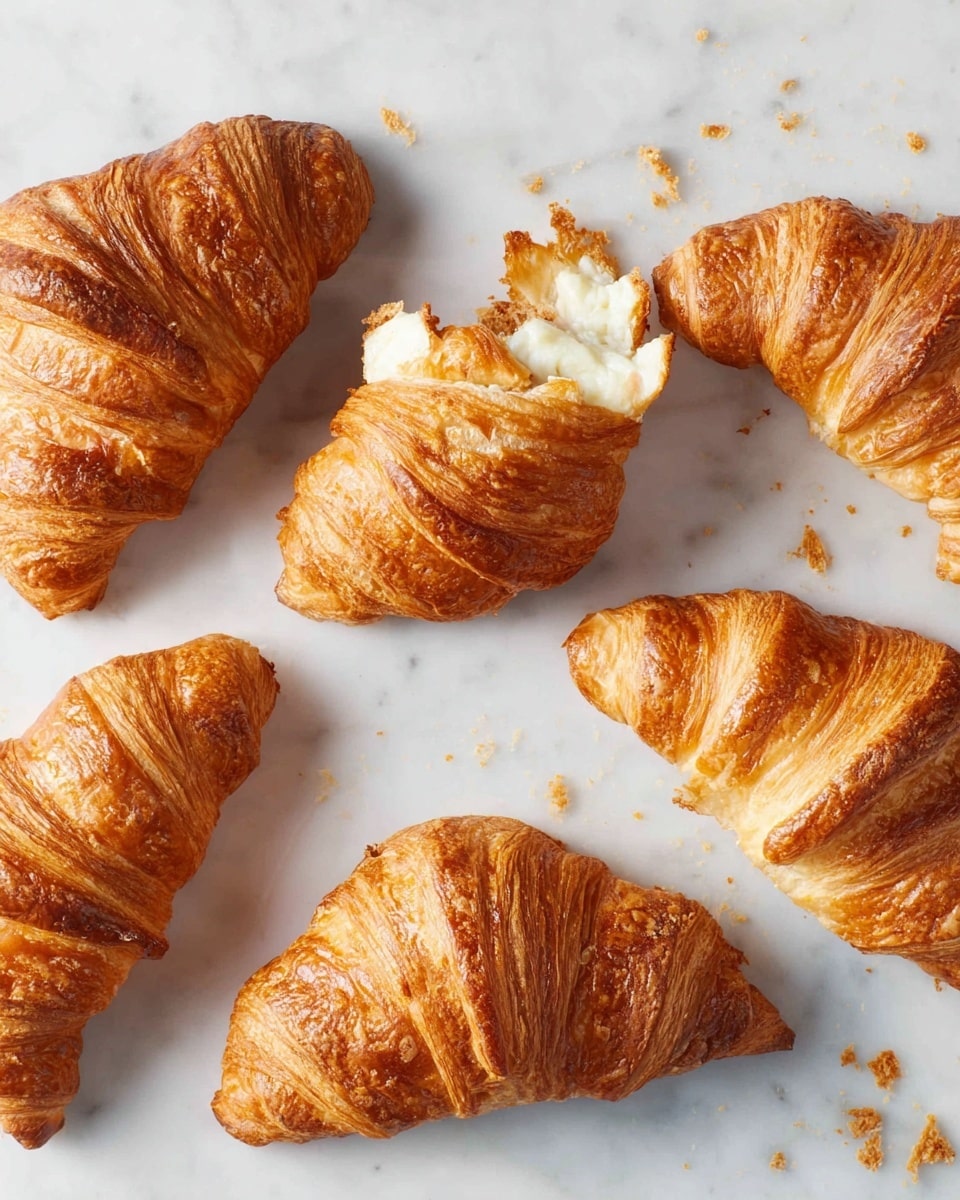
These classic Baker’s Croissants feature a flaky, buttery texture achieved through traditional lamination with a butter block and multiple turns. Perfect for breakfast or a special brunch, the recipe guides you through mixing, folding, shaping, and baking the croissants to golden perfection with a crisp exterior and tender layers inside.
- Prep Time: 2 hours
- Cook Time: 30 minutes
- Total Time: 4 hours including resting and proofing times
- Yield: 12 croissants 1x
- Category: Breakfast, Pastry
- Method: Baking
- Cuisine: French
Ingredients
Dough Ingredients
- 2 large eggs plus enough warm water to make 2 cups (454g) of liquid
- 1/4 cup (50g) granulated sugar, divided
- 5 1/2 to 6 cups (660g to 720g) King Arthur Unbleached All-Purpose Flour
- 2 1/4 teaspoons instant yeast
- 2 tablespoons (28g) butter, melted
- 1/2 cup (56g) King Arthur Baker’s Special Dry Milk or nonfat dry milk (optional)
- 1 scant tablespoon (16g) table salt
- 1 teaspoon King Arthur Pure Vanilla Extract (optional; for sweet pastry)
Butter Block Ingredients
- 30 tablespoons (425g) unsalted butter, cool to the touch
- 3/4 teaspoon table salt
- 1/2 cup (60g) King Arthur Unbleached All-Purpose Flour
Instructions
- Make the sponge: In a large mixing bowl, combine the eggs and warm water to total 2 cups of liquid. Add 1 tablespoon of sugar, 3 cups (362g) of flour, and the instant yeast. Mix thoroughly to blend and set aside to allow the sponge to activate.
- Prepare the butter block: Cut the unsalted butter into 1-inch chunks. In a stand mixer fitted with the paddle attachment, combine the butter chunks with salt and flour at low speed just until smooth with no lumps, careful not to add air. Shape the butter into an 8-inch square with plastic wrap, then refrigerate for 30 minutes.
- Finish the dough: Add melted butter to the sponge. Whisk together the remaining sugar, 2 1/2 cups (298g) flour, dry milk (if using), and remaining salt, then add to the sponge mixture. Mix until dough forms. Knead for 5 minutes, adding flour 2 tablespoons at a time if sticky, until the dough is smooth and elastic. Shape into a 9-inch square, wrap, and refrigerate for 30 minutes.
- Laminate the dough: Roll out chilled dough to a 12-inch square. Place the butter block diagonally in the center, fold dough corners over to enclose the butter, sealing edges with water. Dust with flour, turn over, and gently tap into a rectangle. Roll to 20 x 10 inches, dusting with flour as needed.
- First fold: Brush off excess flour and fold dough into thirds like a letter. Align edges carefully and use water to tack if needed. This constitutes the first turn.
- Second fold: Rotate the dough like a book, roll to 20 x 10 inches again, and fold into thirds. Wrap and refrigerate for 30 minutes to relax gluten.
- Additional folds: Perform two more turns: roll out and fold as before. Wrap and refrigerate for at least 1 hour or overnight. Dough may also be frozen at this stage.
- Shape the croissants: Cut dough in half, refrigerate or freeze one half. Roll remaining half into a 13 x 18 inch rectangle. Trim edges by 1/4 inch. Cut into six 4 x 9 inch pieces by slicing lengthwise into thirds and halving widthwise. Cut each piece diagonally into triangles.
- Form croissants: Stretch each triangle slightly. Cut a 1-inch notch at the base center, then roll the two inner corners of the notch inward and roll the dough towards the tip, tucking the tip under the base. Place on parchment-lined sheet with ends curved inward. Refrigerate for 30 minutes.
- Proof the croissants: Let croissants warm and rise at room temperature for 60 to 90 minutes until noticeably puffed and a gentle finger press leaves an indentation.
- Bake: Preheat oven to 425°F. Brush croissants with a mixture of beaten egg and 1 tablespoon water. Bake for 15 minutes at 425°F, then lower temperature to 350°F and bake for an additional 10 to 15 minutes until deep golden brown and fully cooked. Cool on a rack for 20 minutes before serving.
Notes
- Maintaining the butter’s cool temperature during lamination is crucial for flaky layers.
- Use a ruler and pizza cutter for precise shaping to ensure even baking and rise.
- You can freeze the dough after lamination and thaw before shaping.
- Proper proofing ensures the croissants are airy and light; do not rush this step.
- Brushing croissants with egg wash gives them a beautiful golden shine.
Keywords: croissants, French pastry, laminated dough, flaky croissants, buttery croissants, breakfast pastry